

There are very few people in the world who dreamt of going to space as a kid and ultimately got to look down on our beautiful planet in all its glory. Sir Richard Branson is one of those people.
On July 11, 2021, he was part of the crew of Virgin Galactic’s SpaceShipTwo rocket plane that soared to an altitude of 53.5 miles.
They were in suborbital space.
At that moment, virtually every childhood fantasy came true.
So, Sir Richard Branson was the perfect person to feature in the latest ‘Future of Space’ project by the International Space Association (ISA), where we connect kids in Australian schools to the space industry and try to get the wonders of the universe closer to them.
And Branson would know better than anyone what it takes to look upon the stars and experience Earth from the edge of the cosmos.
Branson’s journey to this moment began two decades prior. In 2004, he founded Virgin Galactic with the bold vision of making suborbital spaceflight accessible to scientists and space tourists. Over the next twenty years, the company dedicated itself to developing its unique spaceplane architecture.
But, the path was not without heavy obstacles.
In 2014, the program suffered a catastrophic setback when the SpaceShipTwo prototype experienced an in-flight breakup during a test flight, resulting in a tragic fatality and a serious injury.
Undeterred, the team pushed forward, unveiling a redesigned second-generation SpaceShipTwo in February 2016. Following extensive structural modifications and rigorous testing, the craft was finally ready to carry its founder.
And so it did. During the milestone flight, Branson and his fellow crew members endured up to three Gs of acceleration before experiencing several minutes of breathtaking weightlessness at the peak of the flight path.
How the next generation sees the future of space
Our previous project was a resounding success, where three Year 5 classes from a school in Perth were invited to share their questions about space with a former NASA astronaut, Dr. Scott Parazynski.
This time around, it was the year 5 class at Scotch College turn to share their ideas and imagination with a man who also dreamt about space since he was a child.
The student submissions showcased an incredible spectrum of youthful imagination, blending practical engineering solutions and whimsical sci-fi ingenuity.
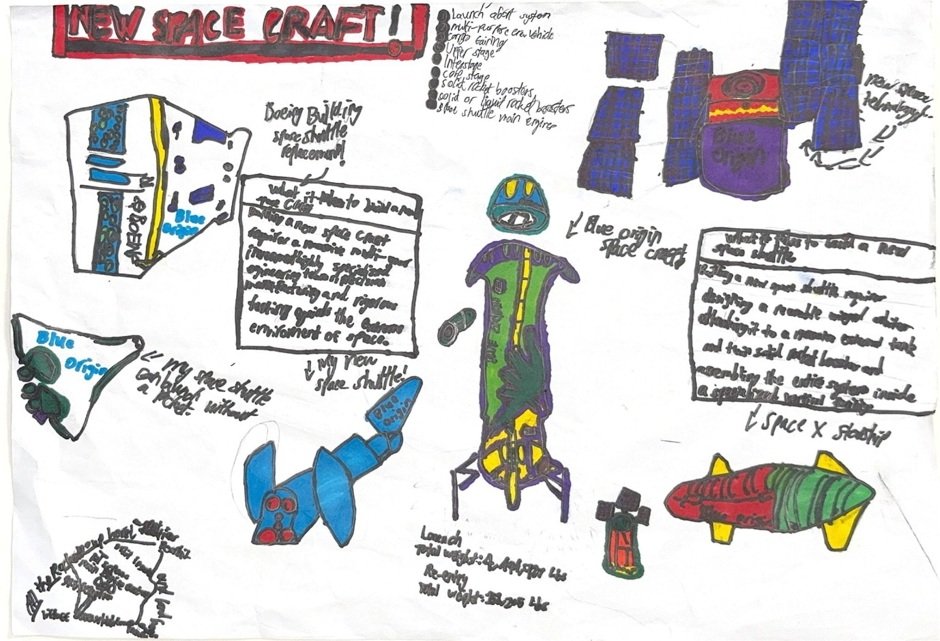
Some students focused heavily on the logistics of extraterrestrial colonization, such as heavy transport rovers and multi-stage rocket configurations. Others zoomed in on everyday quality of life, conceptualizing climate-controlled pods and specialized deep-space cleaning drones.
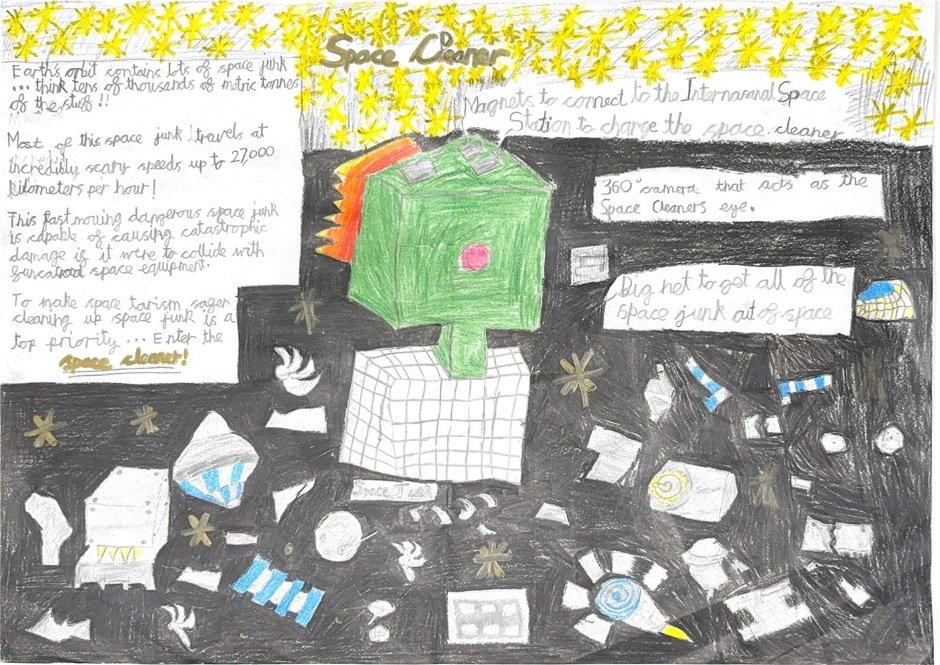
Together, the works form a vivid blueprint of how the next generation envisions living and traveling among the stars.
Sir Richard Branson was kind enough to review the top submissions and share a few words for each. Here's what he said:
"Dear Year 5 Class,
I've been having fun looking at your drawings about the future of space. Well done to all of you; I love the creativity.
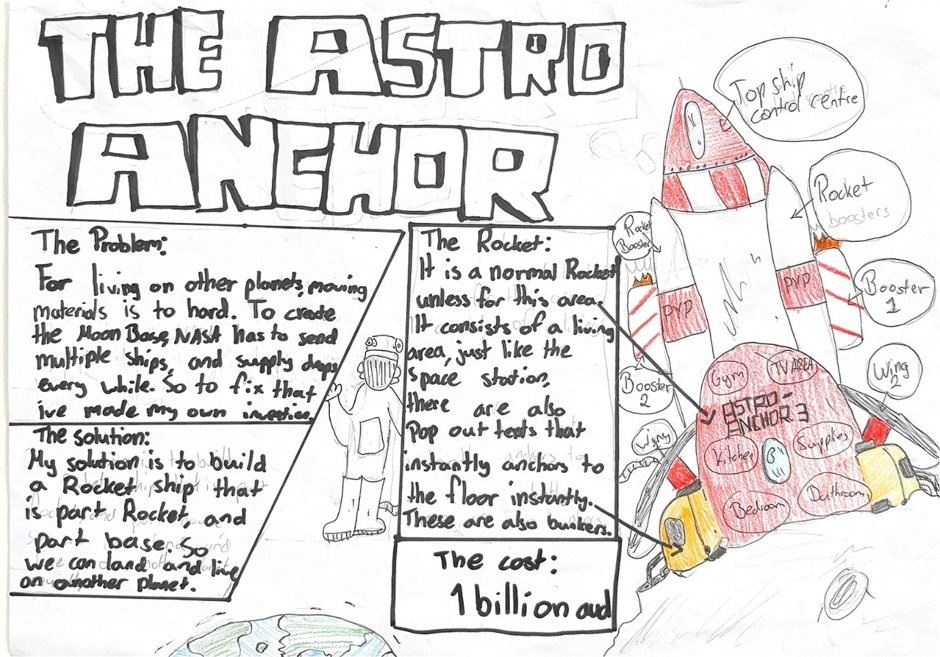
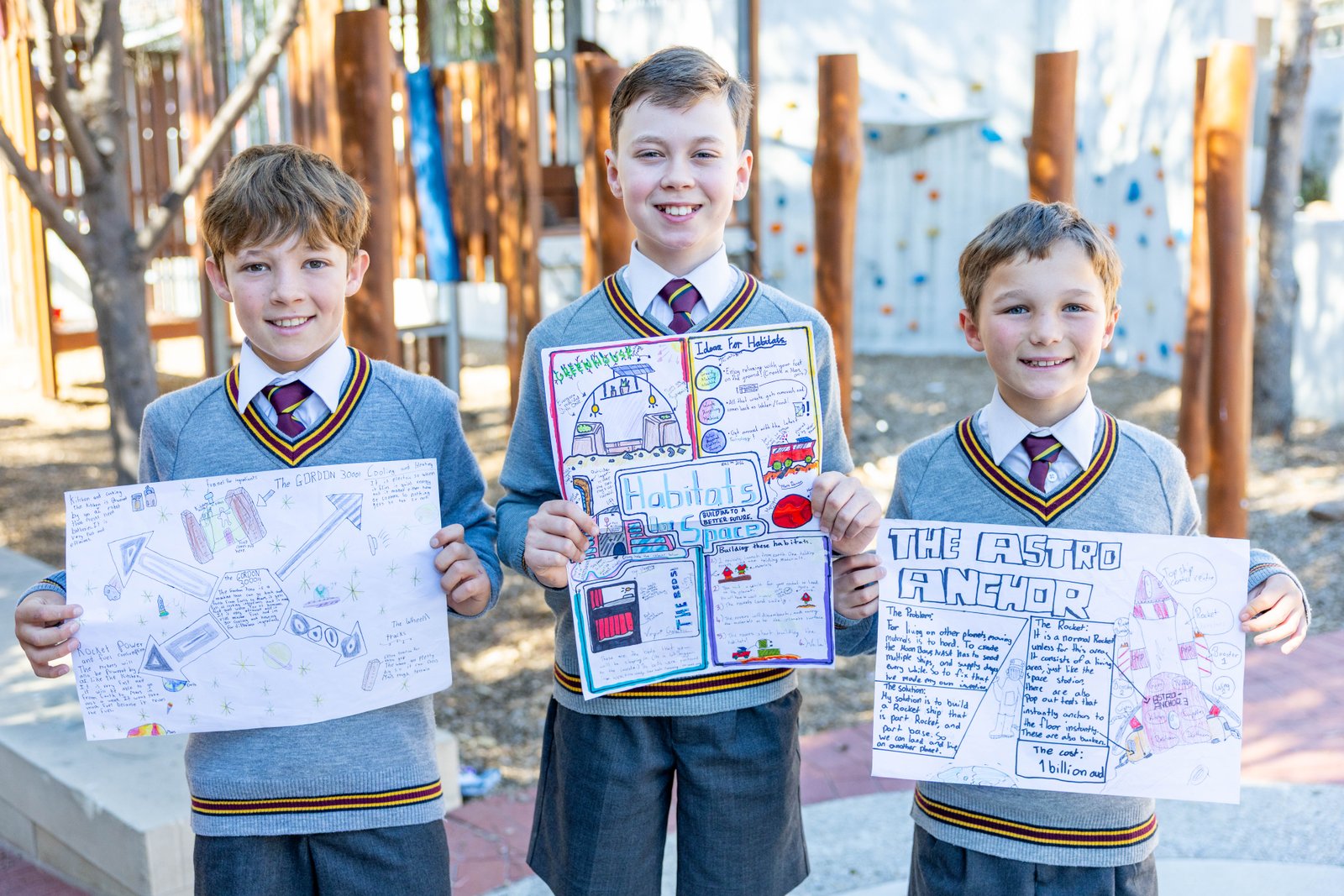
The Astro Anchor - I like your thinking and I’m impressed with your practical drawing. Make that gym a bit bigger, though?
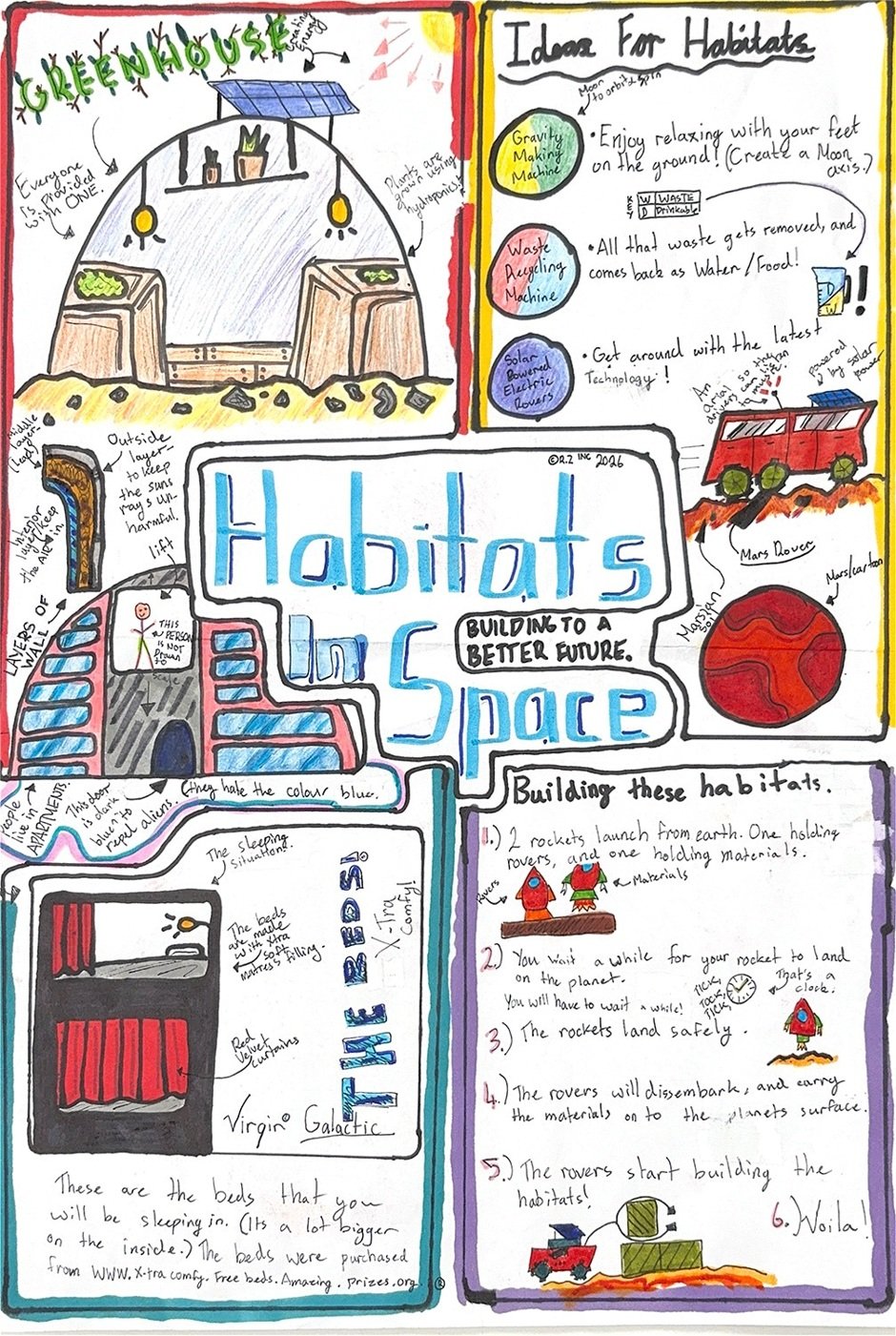
Habitats In Space - such smart ideas. Love the aerial so the astronauts can listen to music too. Two of my favourite things combined.
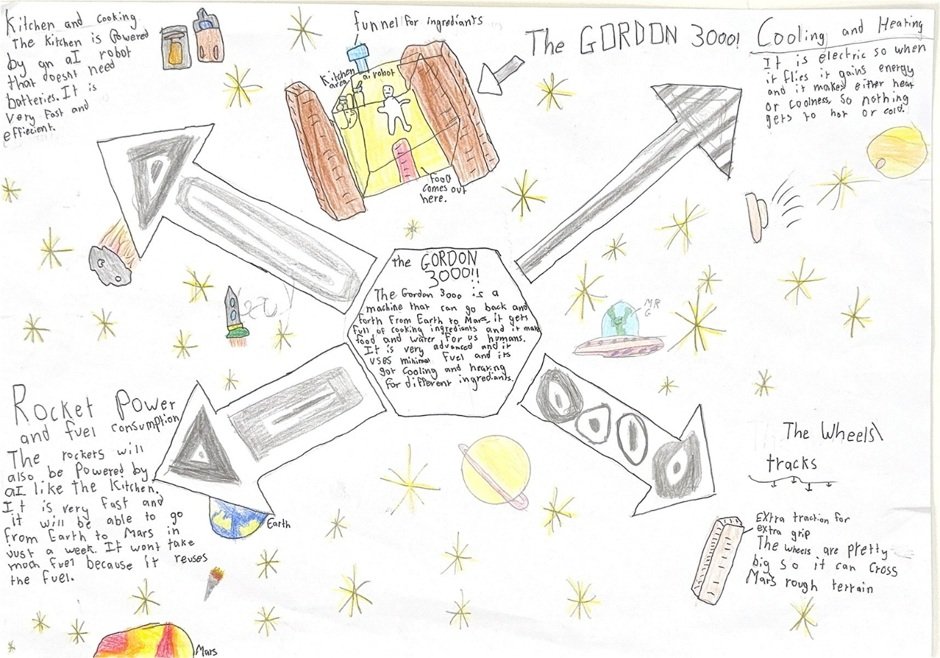
The Gordon 3000 - this one made me think of Flash Gordon, so that gets a big yes from me.”
He then shared an encouraging message to all the students:
“To all of you, keep looking to the stars - you get a great view down there in Australia!
Best wishes to you all,
Richard (Branson)”
Having a global visionary that is Sir Richard Branson speak directly to these young minds is nothing short of transformative. When a true pioneer who turned childhood dreams of spaceflight into reality takes the time to champion their ideas, it validates every ambitious imagination, and then some.
For children who gaze upward with similar wonder, hearing it from someone who has veritably broken through the sky acts as rocket fuel for their own lifelong ambitions and proves that even their boldest dreams are entirely within reach.
Nurturing the next generation of visionaries
If there’s one truth for all of the generations throughout human history, it’s that each has cast its gaze toward the skies. Driven by an innate and enduring curiosity about the mysteries hidden within our solar system and the wider universe, our ancestors stood beneath the night sky, projecting their greatest myths and aspirations onto the stars themselves.
Today, that ancient longing is passed down from one generation of dreamers to the next. Every single day, continuing scientific inquiry and expanding frontiers in space exploration push us further towards closing the gap between human imagination and a deeper comprehension of the complex cosmic phenomena that fill the infinite expanse around us.
Initiatives like the International Space Association's (ISA) 'Future of Space' project do more than just foster wonder: they act as a bridge to capture the boundless imaginations of children while instilling a deep-seated appreciation for safeguarding our home planet.
We have a responsibility to ignite these young, creative minds, and so programs like ours play a key role in broadening awareness of both Earth and the universe. They nurture the growth of visionary thinkers who will one day use their knowledge to drive meaningful advancements for all of humanity.
As we slowly break the bonds of Earth’s gravity, we simultaneously honour the human spirit and make sure that our children inherit a cosmos full of possibilities.
In that regard, the overwhelming enthusiasm and brilliant output from the students struck a powerful chord with the ISA leadership team. Board member Dr. Jeremy Nunn expressed immense excitement over the vibrant engagement shown by the participants.
“Because many prominent space experts are stationed overseas and it’s often difficult logistically to bring them here, the framework on which ‘Future of Space’ is based has provided an invaluable digital link that connects Australian students directly with icons of the space industry,” Dr. Nunn commented.
“It is our hope that these interactions will spark inspiration and open up new horizons for the generation that will undoubtedly shape tomorrow's world.”
A sentiment echoed by year 5 teacher and Primary Years Coordinator Chris Stickman who noted the unique value of the initiative.
"This was such a great opportunity for the boys, with such an inspirational connection to someone like Sir Richard Branson. It provided clear motivation for our students to engage in the Space unit at school and we are really appreciative of the opportunity".
Authors:
Dr Jeremy Nunn
Mr Christopher Beach


